
Shadow Creek · TPC Las Vegas · The Falls Golf Club
Early in my career I saw a photograph of Pebble Beach at night with its cypress trees, and it moved me more than almost any golf image I had ever seen. That one photograph is what inspired me to take on architectural golf course night photography myself. Since then I have created three of these night golf course images, at Shadow Creek, at TPC Las Vegas and at The Falls at Lake Las Vegas, and every one of them was a full production built around a single frame.
Night photography is a lighting project
People see a night golf course photograph and assume I simply waited for dark and opened the shutter. The truth is that some of these frames took me six to eight hours to light. A golf course at night is a massive project. It starts with scouting, walking the holes in daylight to find the one angle that tells the story, then planning where every light will go, where the generators will sit and how far the power cords have to run across the course to reach each tree, bunker and green.
Then comes the craft I love most: balancing the ambient sky against the artificial light. I light the trees one by one so they separate from the darkness, and I time the long exposures to blue hour, that short window when the sky still holds deep color and my lights can sit inside it naturally. Miss that window by a few minutes and the sky goes black. That is why I stay present on site for the whole session, behind the camera, adjusting until the frame is right. It is a big production for one shot, and I would not do it any other way.
Shadow Creek, 2006
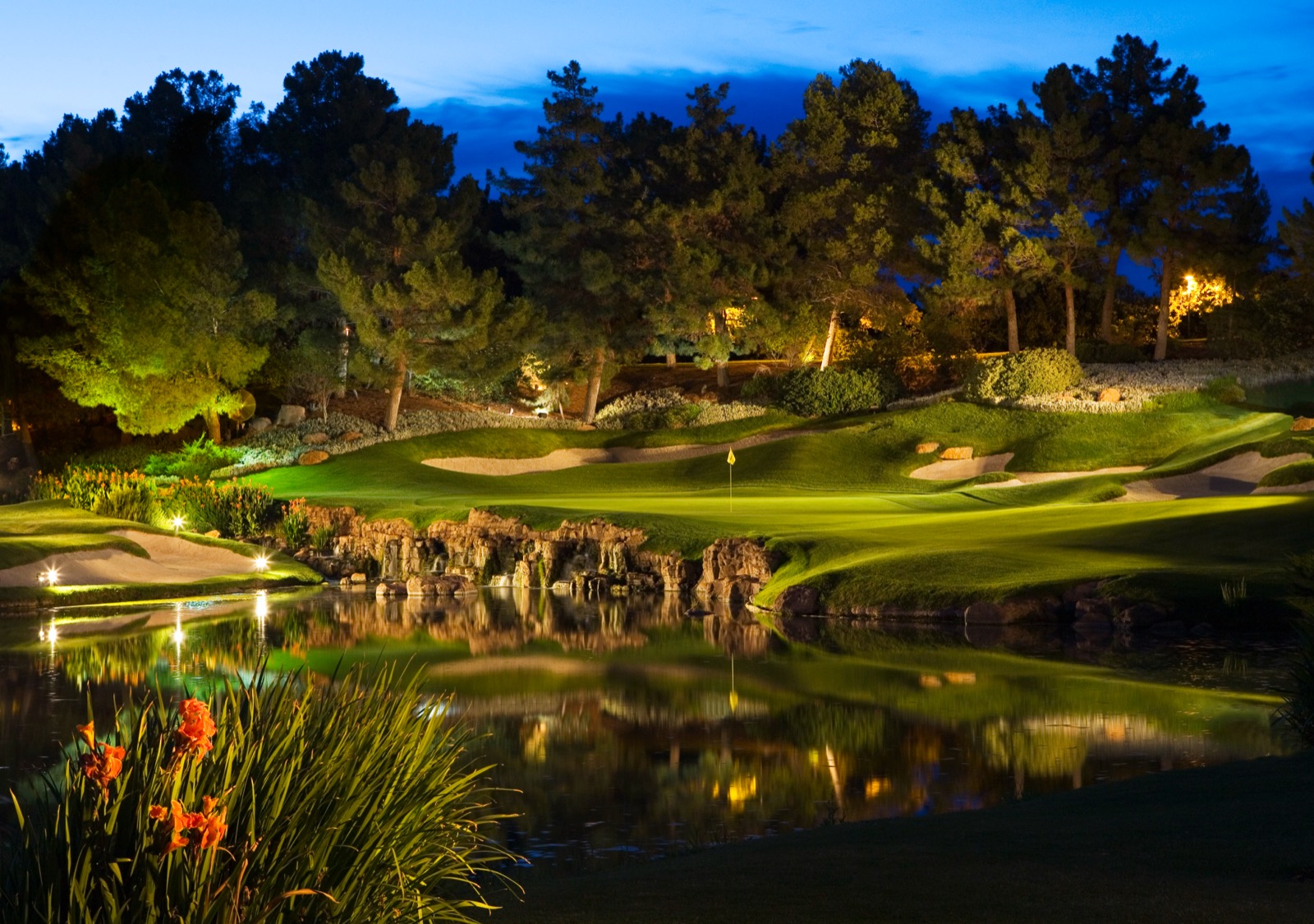
Around 2006 I photographed 1 Shadow Creek Lane for Prudential through Shapiro and Sher. It was Steve Wynn’s old custom home on the Shadow Creek golf course, now an MGM Resorts destination, and at the time it was the most expensive single family home listing and sale in Las Vegas. Only two houses sit on that course, so I knew the view from the back of the property was the seller’s best asset, and I made the golf course at night the hero of the shoot.
The course already had one spotlight. For me that was a starting point, not a finished look. My team and I built it into a full tungsten continuous lighting setup, running generators and power cords hundreds of yards across the course, with two lighting assistants on radio so I could shape every light from behind the camera. We staged everything in daylight, then waited for the sky. That frame alone took three to four hours, watching the dusk deepen and adjusting the lights until the island green, the trees, the orange flowers and that deep blue sky all held together.
There is a little story behind those orange flowers. When we scouted and planned the shot, the plant in the foreground was full of beautiful yellow blooms, and when we came back a few weeks later to shoot, every one of them was gone. So at the last minute we “borrowed” a few orange flowers from across the way and tucked them into the plant. That touch of color is what makes the shot pop.
TPC Las Vegas, 2010
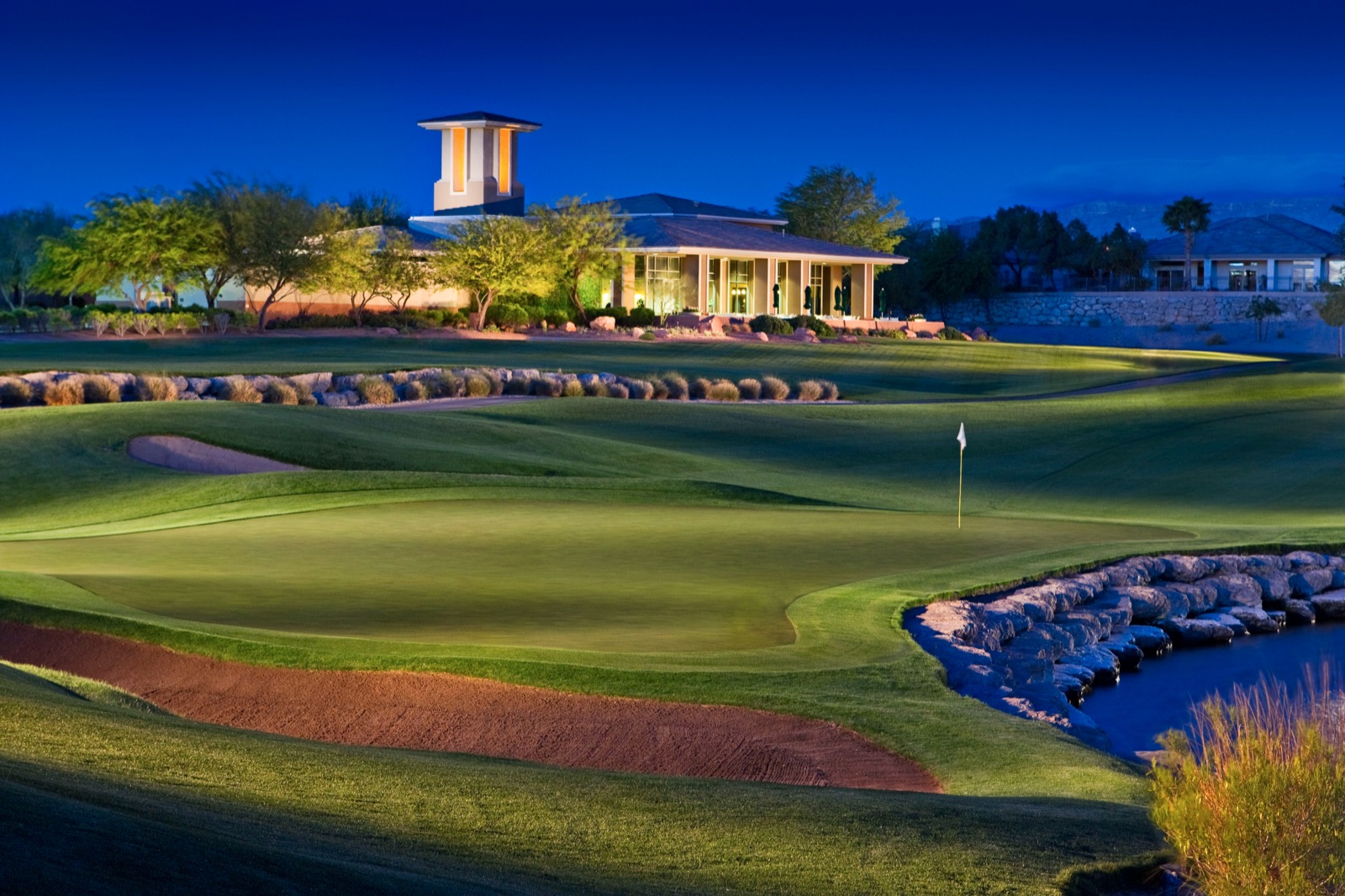
My second night golf course image is at TPC Las Vegas. I photographed it in 2010 in the deep blue light before dawn, with the clubhouse glowing above the green and the water. Shooting the far side of the night asks for the same discipline as dusk: the lights have to be in place and balanced before the sky starts to change, because that window closes fast.
The Falls at Lake Las Vegas, 2008
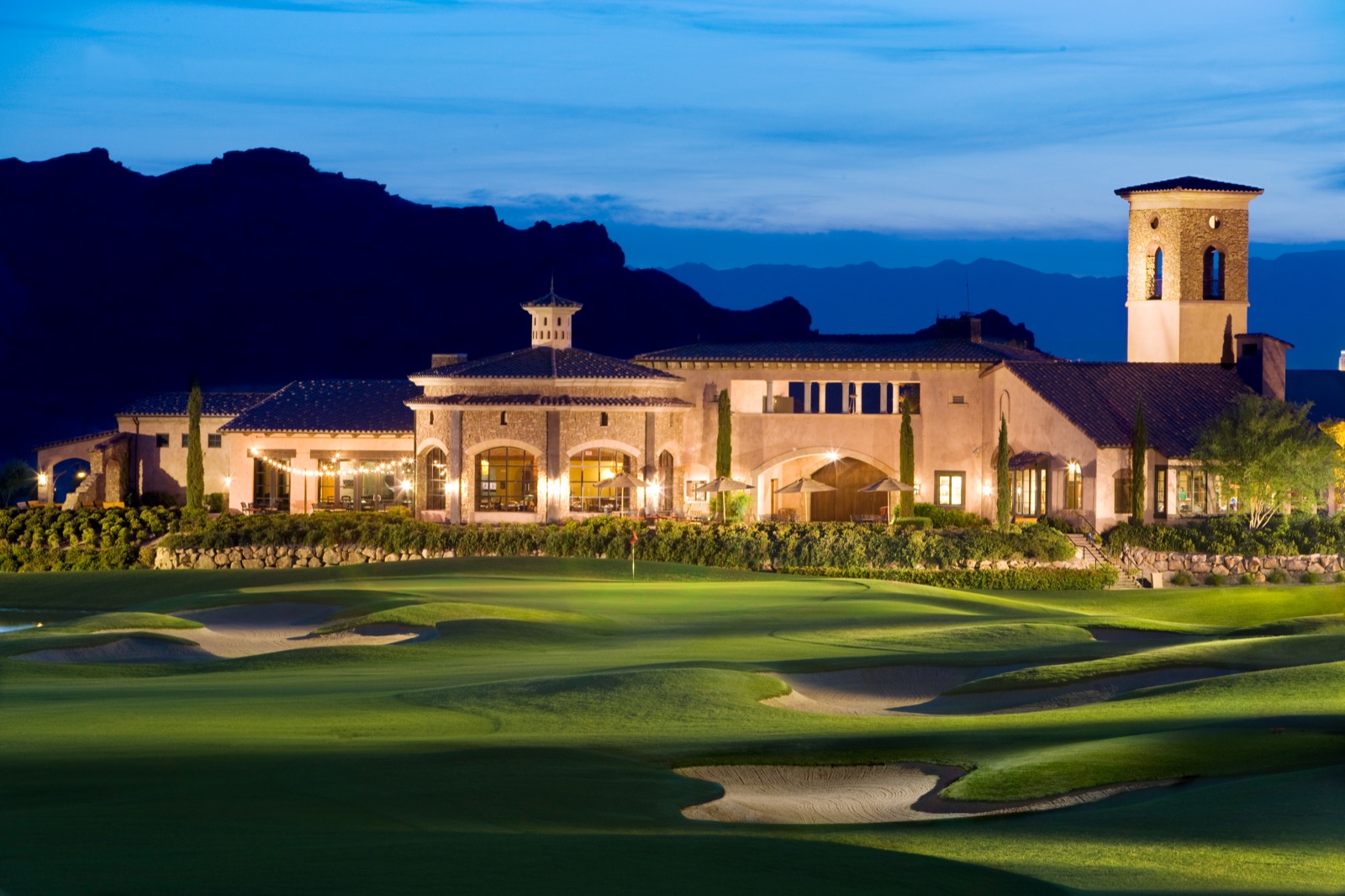
My third was in 2008, when I photographed the long 18th hole at The Falls, the Tom Weiskopf course at Lake Las Vegas. The 18th was a long par five, and the course has since closed, which makes this one of my favorite records of it. On this shoot I did not only light the golf course. I lit the clubhouse too, so the architecture and the finishing hole read as one scene. The hole was so long and so dark that we even used a car’s headlights to help light it. Whatever it takes to get light where the frame needs it, that is the job.
Why I keep chasing the night
Night photography is where timing and lighting matter most, and it is the same discipline I bring to every architecture assignment, from a high rise condo at the Waldorf Astoria to restored Tuscan farmhouses at Casali di Casole to Loewe at The Shops at Crystals. Three night golf course images in all, and each one was worth every generator, every cord and every hour.
Studio J Inc. has been capturing architectural golf course night photography for 26 years in Las Vegas and around the world. If you have any questions about this project, or about a similar upcoming project, please don’t hesitate to contact Eric Jamison.
3 Comments