
TI Building Wrap
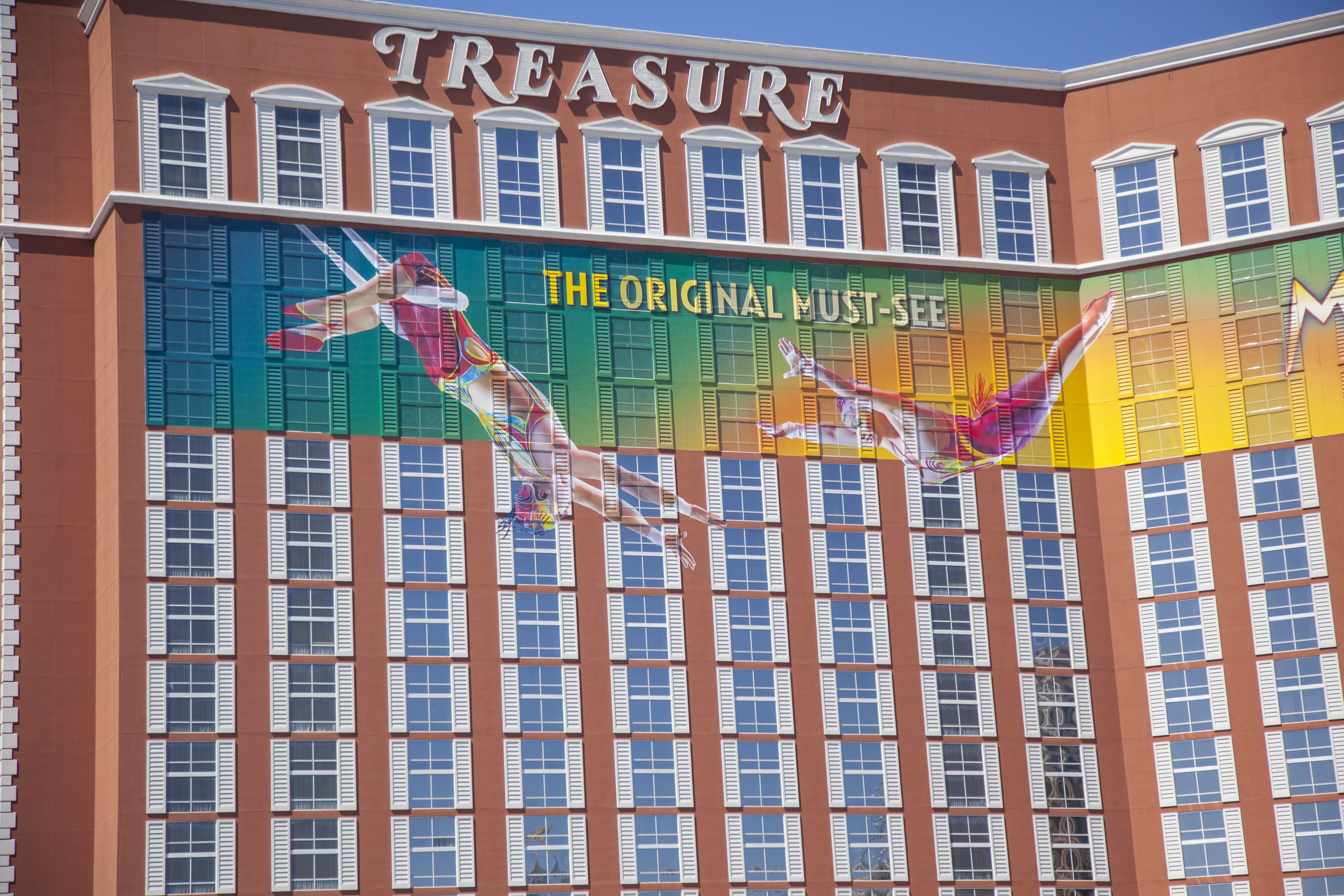
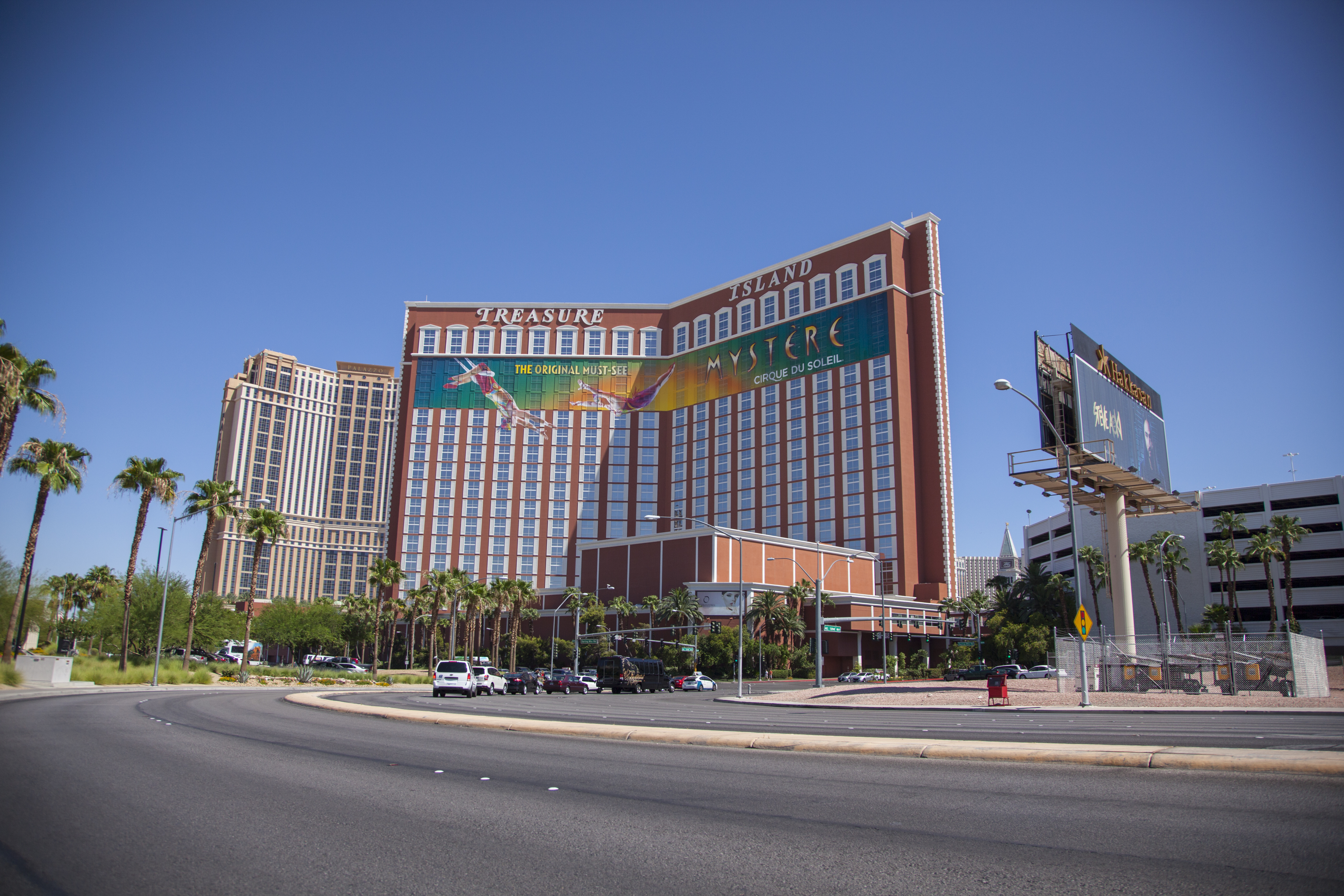
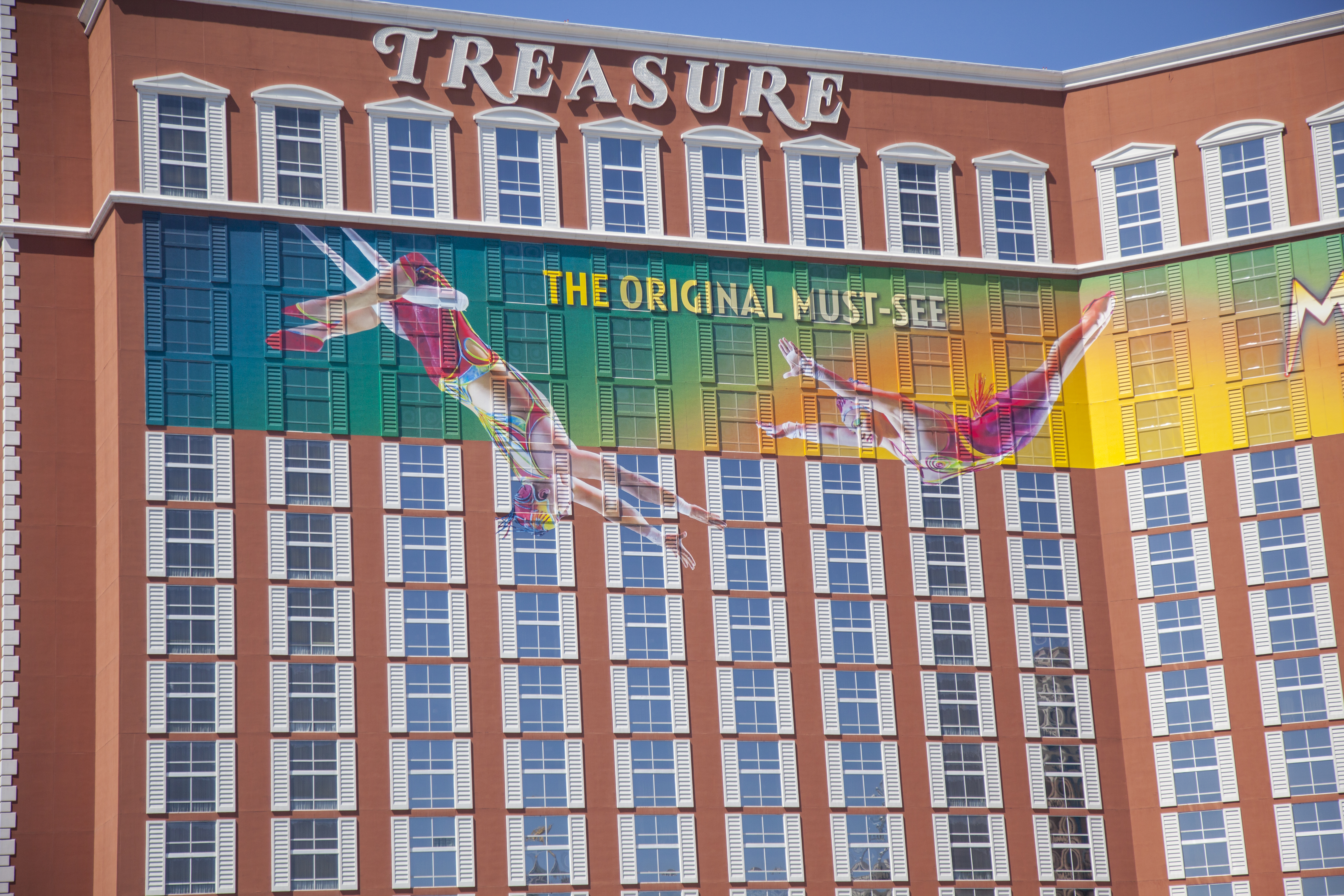
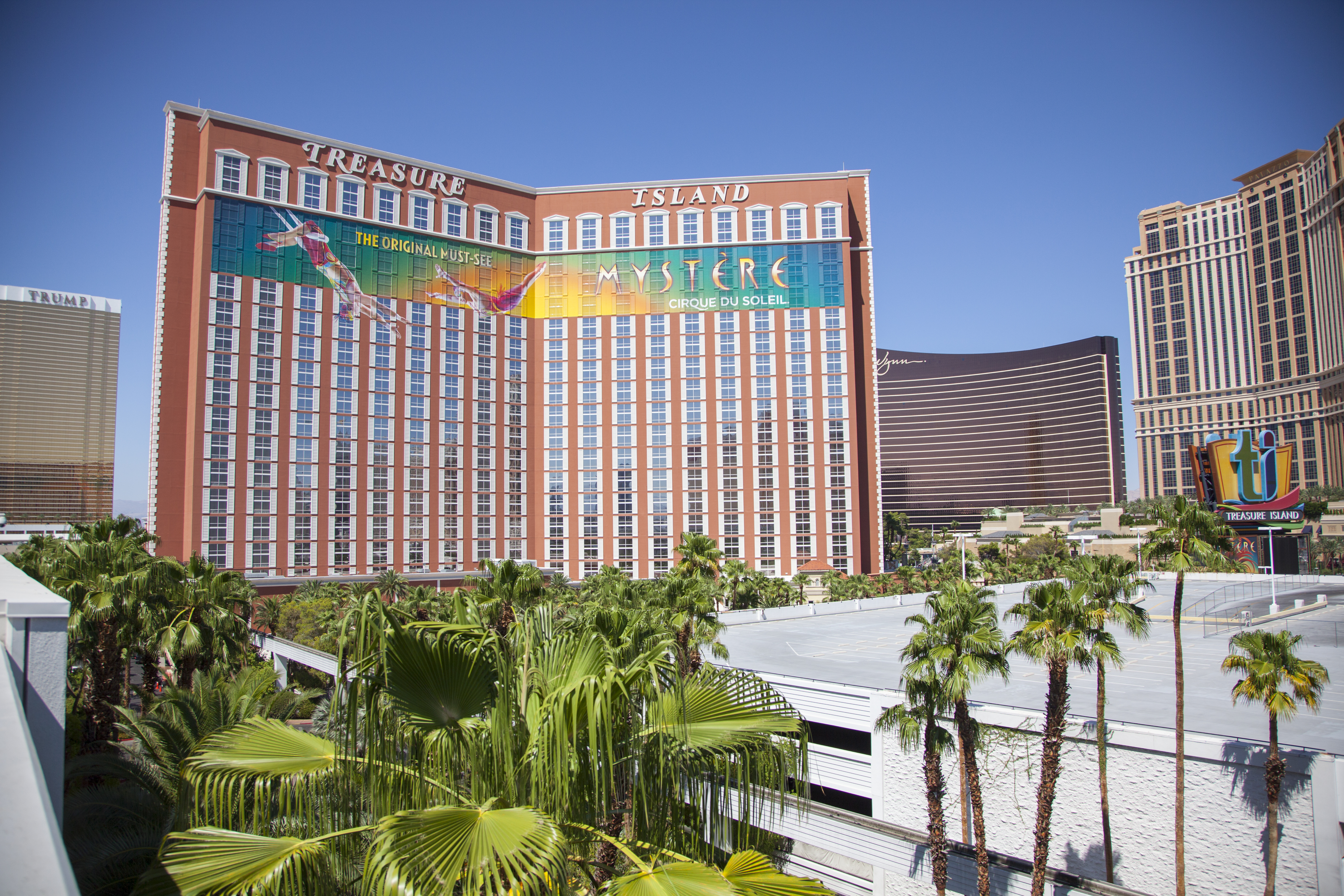
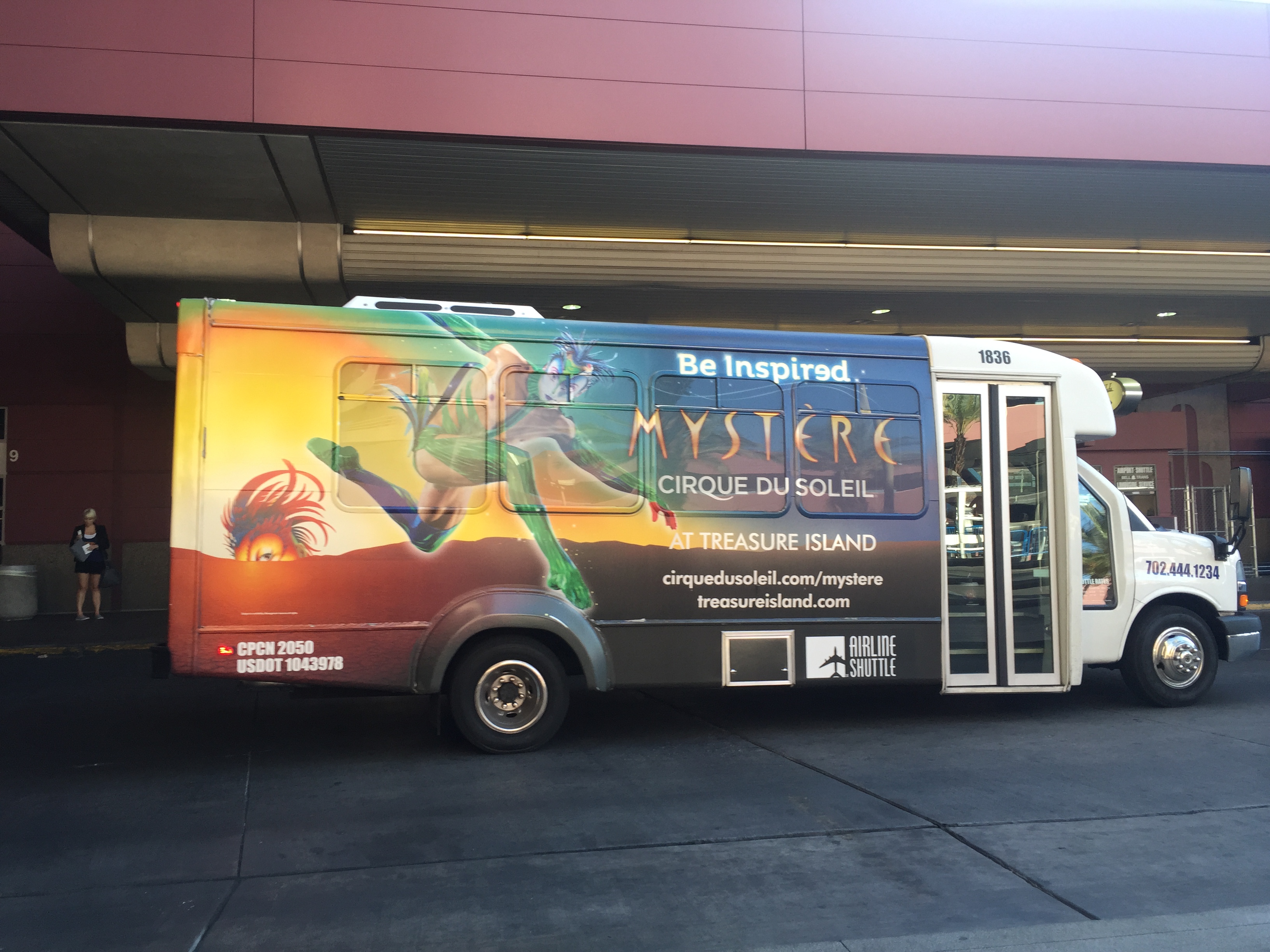
One of our more prominent projects on display on the Las Vegas Strip was work Studio J Inc. did for Cirque du Soleil and their Mystere show at Treasure Island. The single image ran all the way across the top of the hotel, showcasing two acrobats in motion.
Mystere opened at Treasure Island on December 25, 1993. It is Cirque du Soleil’s longest running Las Vegas show, and photographing its performers for a building wrap that size meant every technical choice had to hold up in print at a massive scale.
The project started out in typical fashion. Their marketing team approached us with the creative concept, which showed various comps of acrobats flying in the air, and our goal was to turn that into a high resolution digital reality. At face value it would seem to be a simple enough challenge, however from our experience it is a major technical and logistical problem. We set up a meeting on location at the theatre with the marketing team, show staff, production crew, lighting experts and the stage riggers. We had a lot of questions our team needed answered to figure out how to put this together. In this case one of the biggest questions we had was whether or not we could use our studio lights to photograph these acrobats (and more importantly stop their motion) or whether we would be forced to use stage lighting. Stage lighting can be an amazing quality of light, but it is typically nowhere near as bright as our strobes, and you sacrifice image quality to achieve a shutter fast enough to stop this action. We quickly learned the acrobats had to perform their moves about 50+ feet in the air, and it was impossible to rig our strobes in their stage structure at the angles we needed to achieve the lighting look we were going for. Answer: stage lighting.
After getting the rest of the shoot logistics under control, we set a shoot date and time and made sure to have all the Cirque du Soleil and Studio J Inc. team members in place for the shoot day. We arranged to have the Cirque technical lighting team there hours in advance of the performers and spent that time on stage, calling out different stage lights (each one has a designated number labeled on it) in their lighting grid and aiming them at the spot we believed the performers would be at that peak moment in the air. Ultimately we developed a custom lighting look, not a part of their preset show looks. This was a tedious and time consuming process, but it was an essential part of the final image we delivered. One of the other questions we answered during our preproduction meeting was how far of a throw it would take to photograph our subjects. By taking test shots from different heights we determined the proper upward angle our client liked best, and we also determined the lens needed to shoot this would be a Canon 400mm f/2.8. We picked the 400mm f/2.8 for a few reasons. First, we needed a wide aperture lens to stop action in a low light scenario. Second, we needed a long lens to maximize the use of every single pixel our camera had to offer, to keep quality at the highest level since we knew this was going to print big. In the end all of our critical preproduction work resulted in a very seamless shoot with a great quality product for our client to use. As you can see this was a massive team effort, from the Studio J Inc. team’s execution to the creative team’s concepts, to the show and technical teams’ preparation, and of course to the amazing performers who risk their lives day in and day out. Cheers!
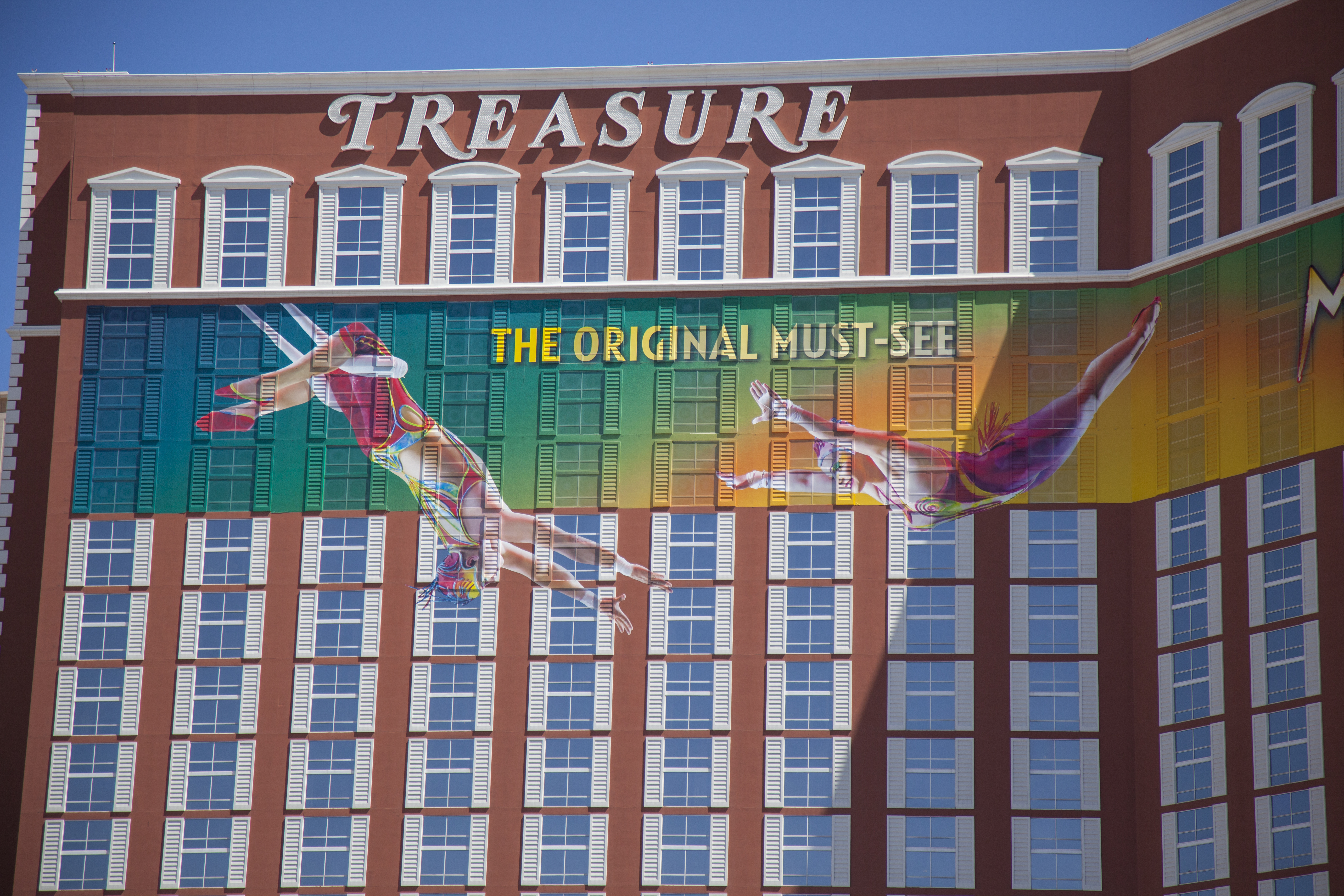
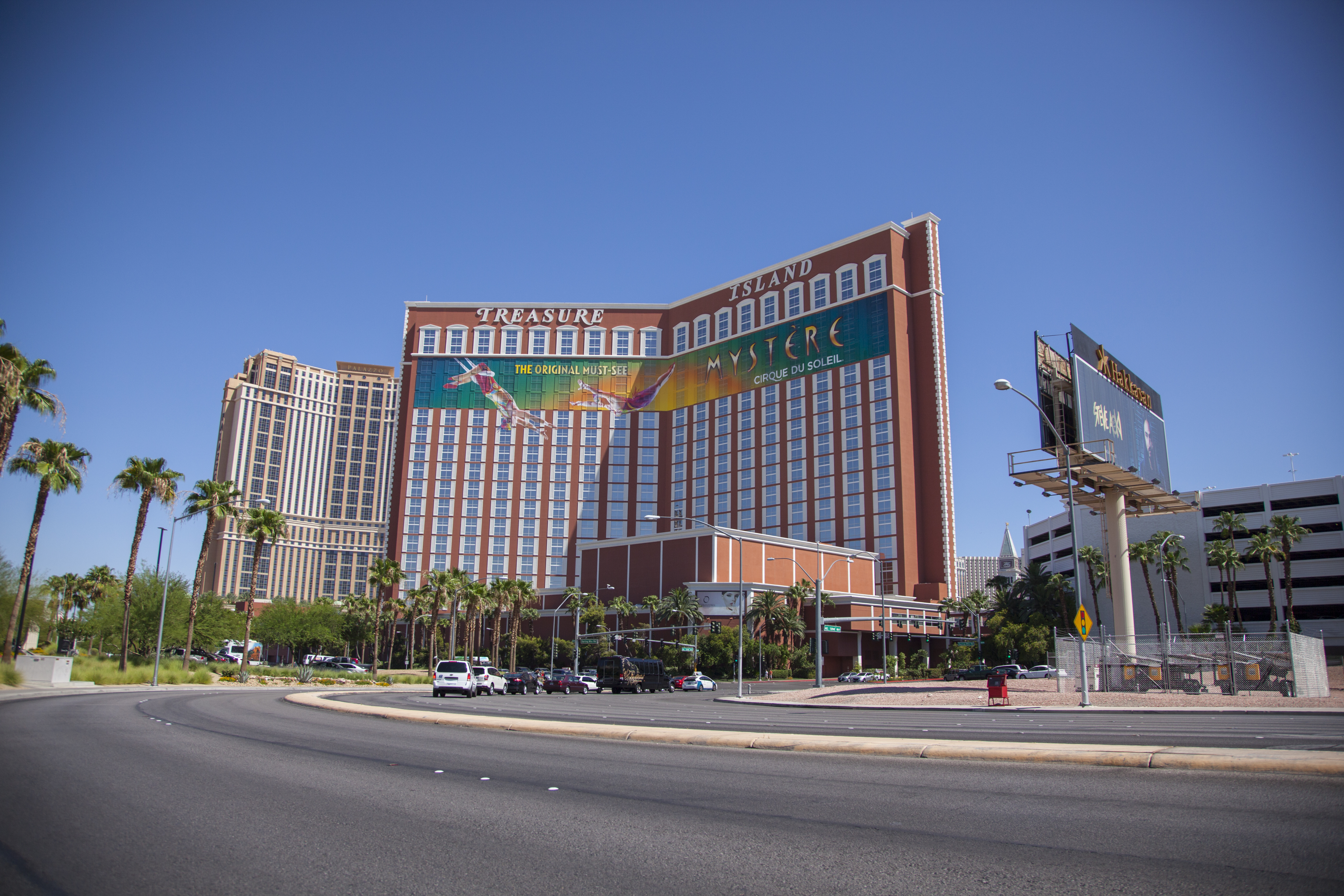
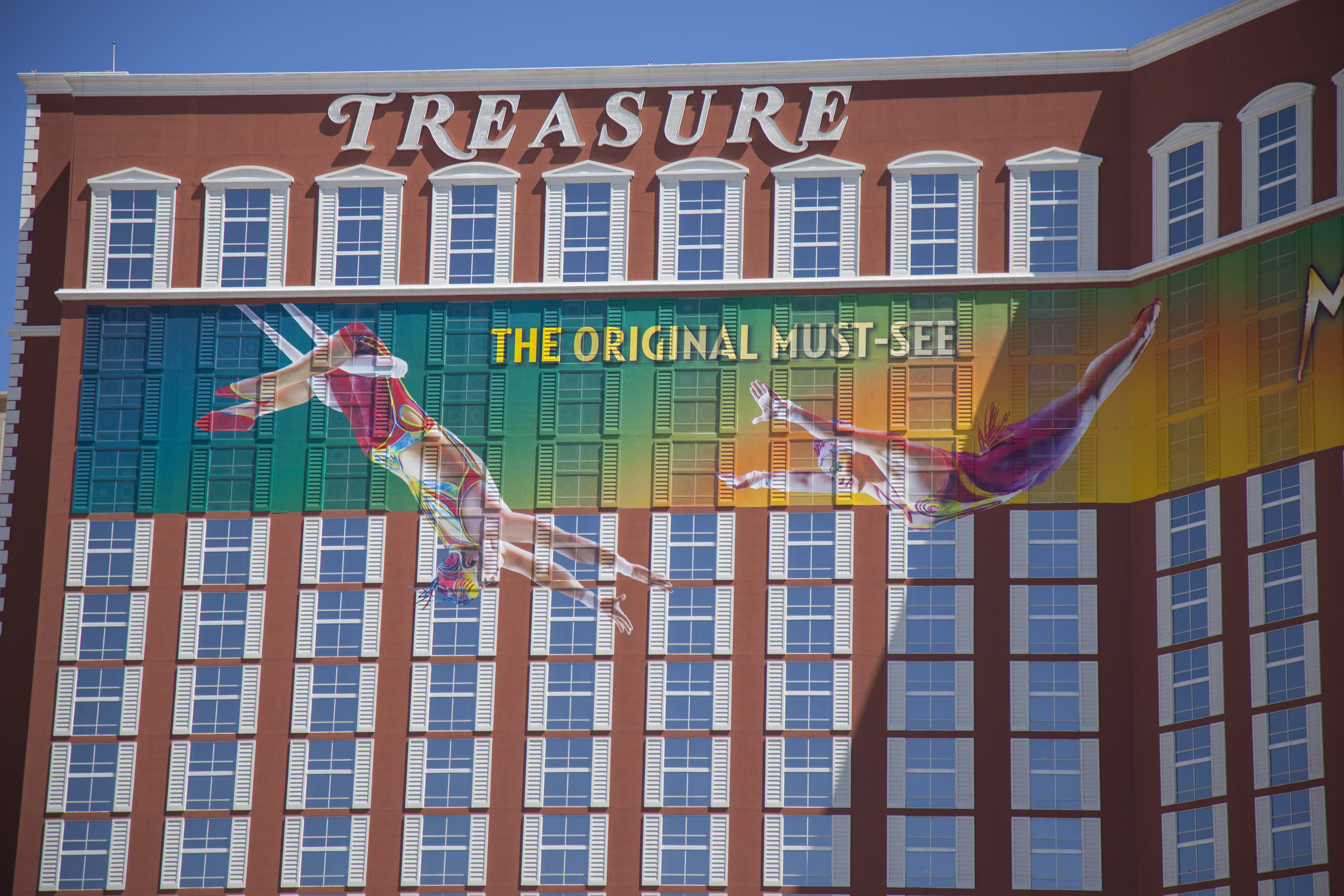
Studio J Inc. has been capturing architectural photography for 26 years in Las Vegas and around the world. If you have any questions about this project, or about a similar upcoming project, please don’t hesitate to contact Eric Jamison.
2 Comments